
The Six-Month Strategy Behind a Six-Figure Launch
What actually happens before cart open, and why most people skip the most important part…
A $110,000 launch doesn't start on launch day.
That's the part nobody shows you. You see the cart open announcement, the enrollment numbers, the revenue screenshot. You don't see the six months of deliberate, unglamorous groundwork that made those numbers possible.
I want to show you that part. Because if you've ever watched someone hit a big launch number and thought it happened fast, or happened because of some content formula or lucky moment, I want to offer a different explanation.
It didn't happen fast. It was built. Methodically, in phases, over months. And every phase had a specific job.
Here's exactly how the most recent BrandShift Method launch came together.
Phase One: Reach. December and January.
The first thing I did had nothing to do with selling.
In December and January, I was almost exclusively focused on cold audience content. High-level, broadly relatable content built for people who had never heard of me. The goal wasn't conversion. It wasn't even engagement. The goal was reach, new eyeballs, expanded awareness, people finding my profile who had no prior context for who I am or what I do.
This is the phase most business owners skip or rush through because it doesn't feel productive. There's no immediate feedback loop. You're not getting DMs or sales inquiries. You're planting seeds in rooms you haven't been in before.
But here's what that phase actually does: it builds the audience you'll eventually sell to. If you try to launch to the same 500 people every time, your results will reflect that. If you spend two months deliberately expanding who's in the room before you ever mention an offer, your launch has a fundamentally different starting point.
Cold audience content has one job: stop the scroll for someone who doesn't know you yet. That's it. Not to explain your methodology. Not to pitch your program. To earn the follow from a stranger.
I spent two months doing that work before I thought about selling anything.
Phase Two: Engagement. February and March.
Once reach was building, I shifted the content strategy entirely.
I pulled back on broad, cold-audience content and started moving toward warmer, more specific posts. Content that required something from the reader. Posts that made people comment, save, share, respond. I was less concerned about how many people were seeing my content and more concerned about who was showing up and what they were doing when they got there.
This is the prelaunch phase. And its job is signal, not scale.
You're watching your audience self-select. Who's engaging with the teaching content? Who's commenting on the personal content? Who's saving the strategy posts? Those are your buyers. They're telling you they're paying attention, that the content is resonating, that they're building a relationship with your brand.
Engagement content also does something subtler: it warms the algorithm. When your audience starts interacting more, the platform starts showing your content to more of them. By the time you're ready to launch, you're not just talking to a warm audience, you're talking to a warm audience that the algorithm is actively prioritizing.
This phase is where you find out if the reach work paid off. If December and January did their job, February and March feel like a shift in energy. More responses. More DMs. More "this is exactly what I needed to hear."
Phase Three: The Private Invite. Running Quietly Alongside Everything Else.
While the public content strategy was running, I was having a completely separate set of conversations.
Private outreach. Direct messages and emails to people who had previously expressed interest in BrandShift Method but hadn't enrolled. Not a broadcast. Not a mass email. Personal, specific, one-on-one conversations with warm relationships that already existed.
This is the most underrated part of any launch strategy and almost nobody talks about it because it doesn't look impressive from the outside. There's no reel to post about it. There's no metric that captures it cleanly. It's just you, reaching back out to someone you know is interested, and having a real conversation.
But some of the most valuable enrollments in any launch come from exactly this. People who were ready six months ago and needed someone to reach back out. People who said "not yet" and meant "not right now." People who just needed the follow-up.
While the public funnel was building, I was working the warm list quietly. Both tracks ran simultaneously. Both mattered.
Phase Four: Obsessed FM.
Before the cart opened, before the webinar, I launched a podcast.
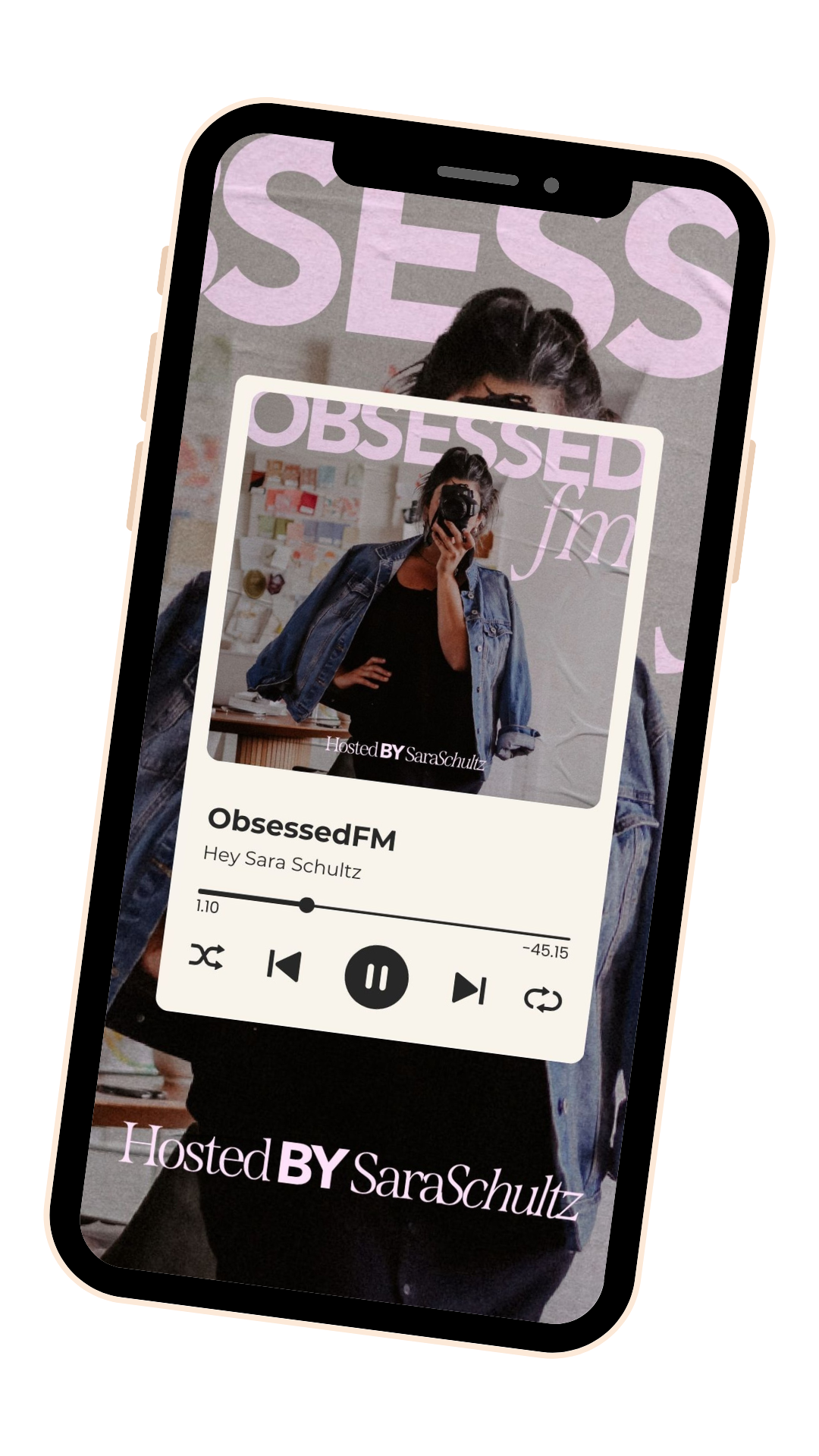
Obsessed FM is a ten-episode mini-series built around a specific thesis: what actually happens when women step into their power and make real money. Not the highlight reel version. The real version, the sovereignty, the identity shifts, the things that change when your financial reality changes.
It was designed to do two things simultaneously. Build my email list and indoctrinate people into my ecosystem before I asked them to buy anything.
This is the part of the strategy I want to sit with for a moment, because it's the piece that most people don't build deliberately.
Indoctrination sounds clinical, but what it actually means is this: by the time someone sits in your sales conversation, they should already understand how you think. They should already be nodding at your framework, already using your language, already seeing their problem through your lens. If you're doing all of that education inside the sales conversation, you're working too hard and converting at a lower rate than you could be.
Ten podcast episodes gave people ten hours inside my thinking before I ever pitched anything. If someone listened to all ten and stayed, they weren't a cold lead at the webinar. They were already warm, already aligned, already inclined toward yes. The podcast did that work so the sales conversation didn't have to.
It was also a list builder. Every person who subscribed was opting into my ecosystem, raising their hand and saying they wanted more. That list became part of the audience I marketed the webinar to.
Phase Five: ON, On Purpose. The Conversion Event.
On April 15, I hosted a live webinar called ON, On Purpose.
This was the conversion event, the moment the entire funnel pointed toward. The goal was to bring together everyone who had been in my ecosystem across all of the previous phases, the reach content audience, the engaged followers, the private invite conversations, the podcast listeners, and give them a live experience that crystallized the problem and positioned BrandShift Method as the solution.
By the time people showed up to that room, most of them had been in my world for months. The webinar wasn't introducing me to strangers. It was giving a warm room a reason to say yes right now.
I pitched BSM, opened the cart, and the launch was live.
Phase Six: The Launch. Twenty Days.
The open cart ran April 15 through May 4. Twenty days of content across Instagram, email, and stories, roughly 25-plus defined pieces, each one with a specific job tied to where buyers tend to be in their decision-making at that point in a launch.
The content moved through distinct phases: making the program feel inevitable for early movers, handling objections for the people watching from the middle, building urgency for fence-sitters in the final days, and a hard close at the end with no softness and no wiggle room.
Every piece of content had a job. None of it was filler. None of it was posted just to stay visible.
The Numbers.
Here's what six months of groundwork produced in twenty days.
18 new clients welcomed into the BrandShift Method ecosystem.
11 VIP enrollments
4 paid in full
7 on payment plans
7 base enrollments
1 paid in full
6 on payment plans
2 Mastermind placements
8 additional offer sales (downsells and smaller offers)
Total revenue closed: $110,675.
Cash collected at registration: $48,364.
Pay-in-full incentives were built deliberately into the offer structure while keeping payment plans available for people who were ready but needed flexibility. The result was nearly $50K collected immediately with recurring revenue flowing in behind it.
What I Actually Want You to Take From This.
The launch was twenty days. The preparation was six months.
The reach content in December wasn't launch content. The podcast wasn't launch content. The private conversations weren't launch content. But all of it was the launch, because all of it was building the room I was eventually going to sell to.
Most people try to compress this timeline. They want to go from cold audience to cart open in a few weeks and wonder why the numbers don't reflect the effort. It's not an effort problem. It's a sequencing problem.
You cannot warm a cold room and close it in the same breath. Reach, then engagement, then indoctrination, then conversion. Each phase depends on the one before it. Skip a phase and you feel it in your results.
The groundwork is the work. The launch is just the harvest.
Want to hear more about how I think about content, strategy, and building a brand that does the warming-up before the sale?
Obsessed FM is a ten-episode podcast mini-series on power, sovereignty, and what happens when women make real money. It's evergreen, it's free, and it's a good place to start if you're new here.
[Listen to Obsessed FM 👇🏽]
Read more:










Raising your rates isn't just about increasing your revenue. It's about buying back your time. When you charge more, you can reach the same income goal with fewer clients, fewer projects, and less capacity tied up in client work. This post explores the real reason to raise your rates and how better pricing can create more room for the life and work you actually want.